Attack comes just 10 days after a police personnel was killed in Anantnag; security forces launch search operation to track down attackers
Two migrant workers from Chhattisgarh were killed after terrorists opened fire at a brick kiln in south Kashmir’s Kulgam district on Friday evening, July 31. The incident took place in the Kelam area, where the victims were working as labourers. The attack initially left one worker dead and another critically injured. However, the second victim also succumbed to his injuries at a hospital in Srinagar on Saturday morning, taking the death toll to two.
According to reports, the deceased have been identified as Deepak Ratre (24) and Bhupinder Bhaina (28), both residents of Chhattisgarh. They were employed at a brick kiln in Kelam village of Kulgam district and had travelled to Kashmir in search of employment.
The incident has once again raised concerns about the security of migrant workers in the Kashmir Valley, particularly those employed at brick kilns and other workplaces located in relatively isolated areas.
How the Attack Unfolded
According to preliminary information reported by The Indian Express and The Tribune, the attack took place on Friday evening when an unidentified man approached the migrant workers near their accommodation at the brick kiln.
Investigators are examining accounts suggesting that the attacker initially engaged the workers in conversation before suddenly opening fire at close range. Family members of the victims reportedly told investigators that the man was carrying a bag and left the scene after the shooting.
Both workers sustained critical bullet injuries and were rushed to Government Medical College (GMC), Anantnag, for treatment.
Deepak Ratre succumbed to his injuries, while Bhupinder Bhaina was referred to the Sher-i-Kashmir Institute of Medical Sciences (SKIMS), Soura, in Srinagar, for specialised treatment after receiving initial medical care.
Despite medical intervention, Bhupinder also died on Saturday morning.
The deaths of the two workers have left their families in Chhattisgarh devastated.
Security Forces Launch Search Operation
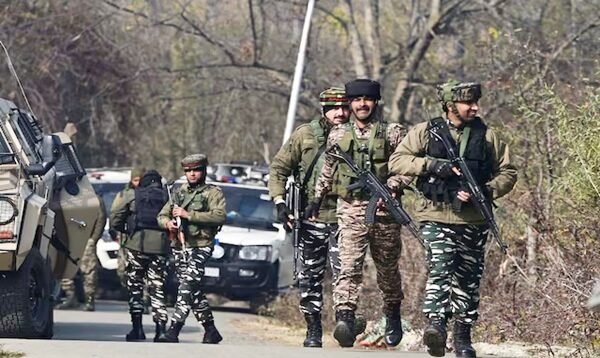
Soon after receiving information about the shooting, Jammu and Kashmir Police, along with Army and paramilitary personnel, reached the spot and cordoned off the area.
Security forces launched a joint search operation to locate the attackers. Additional security arrangements were also made in surrounding areas, while surveillance and checking activities were intensified.
According to The Indian Express, security personnel established checkpoints and restricted movement around the affected villages as part of the search operation.
Investigators were examining possible leads, including the circumstances of the attack and the identity of those responsible.
The Resistance Front Claims Responsibility
The attack also drew attention after The Resistance Front (TRF), an organisation described by authorities as a proxy of the Pakistan-based Lashkar-e-Taiba (LeT), claimed responsibility through social media posts.
However, police were investigating the authenticity of the claim and had not conclusively established the identity of the attackers at the time of the initial reports.
The claim was being examined as part of the wider investigation into the killings.
Lieutenant Governor Manoj Sinha Strongly Condemns the Attack
Jammu and Kashmir Lieutenant Governor Manoj Sinha strongly condemned the killing of the migrant workers and directed security agencies to intensify their operations against those responsible.
In a post on X, Sinha said he had spoken to Director General of Police Nalin Prabhat and senior security officials following the incident.
He directed security forces to step up their operations and eliminate the terrorists involved in the attack.
The Lieutenant Governor also said that Jammu and Kashmir Police and security forces had cordoned off the area and launched an operation to bring the perpetrators to justice.
Expressing condolences to the families of the deceased, he assured that the administration stood with them during this difficult time.
Second Terror Attack in Kashmir Within 10 Days
The Kulgam attack came just 10 days after another terrorist incident in south Kashmir, in which Jammu and Kashmir Police Head Constable Ashiq Hussain Qureshi was shot dead in Anantnag on July 22, 2026.
Qureshi was deployed for security duty in connection with the ongoing Amarnath Yatra when he was targeted.
The two incidents within a short period prompted security agencies to review the prevailing security arrangements across the Valley.
According to reports, the Kulgam shooting was also the first fatal terrorist attack targeting seasonal migrant workers in Kashmir since October 2024, when a migrant worker from Bihar was killed in Shopian.
Security Review Held, Protection Measures to Be Strengthened
Following the Kulgam killings, Lieutenant Governor Manoj Sinha chaired a high-level security review meeting with senior officials, including Chief Secretary Atal Dulloo and DGP Nalin Prabhat.
According to The Indian Express, the meeting discussed strengthening security arrangements for migrant workers, particularly those employed at brick kilns and construction sites.
Among the measures discussed were:
- Increasing surveillance and night patrolling in areas where migrant workers live.
- Strengthening security checks and area-domination exercises.
- Relocating migrant workers to designated clusters or safer locations to make security arrangements easier.
- Reviewing existing Standard Operating Procedures (SOPs) for the protection of workers from outside Jammu and Kashmir.
- Ensuring that employers register migrant workers with local police and district authorities and provide them with insurance.
Officials also discussed the challenges of securing workers who are spread across hundreds of brick kilns and other workplaces throughout the Valley.
Migrant Workers Face Renewed Security Concerns
The attack has once again highlighted the vulnerability of migrant labourers who travel to Kashmir from different parts of the country in search of seasonal employment.
Thousands of workers from states such as Chhattisgarh, Bihar, Uttar Pradesh, Punjab and West Bengal travel to the Valley every year. Many are employed in brick kilns, construction projects, agriculture and other labour-intensive sectors.
These workers often live near their workplaces, sometimes in temporary shelters located away from densely populated residential areas.
According to estimates cited by The Indian Express, between three lakh and five lakh seasonal migrant labourers work in Kashmir during the peak employment season, which generally runs from April to October.
For many families, migration to Kashmir is an important source of income, making it difficult to abandon their jobs despite security concerns.
The killing of Deepak Ratre and Bhupinder Bhaina has therefore renewed questions about how authorities can ensure the safety of migrant workers while allowing them to continue earning their livelihoods.
The investigation into the Kulgam killings is ongoing, with security forces continuing efforts to identify and apprehend those responsible.